How Does a Water Fountain Work? A Guide to Pumps, Nozzles, Lighting, and Control Systems
Behind every beautiful water fountain is a carefully designed system of equipment working together.
From the pump that moves the water to the nozzle that creates its shape, every component contributes to the final appearance and performance of the fountain.
Understanding how a water fountain works can help architects, designers, developers, and property owners make better decisions when planning a water feature.
How Does a Water Fountain System Work?
The basic principle is relatively simple.
Water is collected in a basin, reservoir, pond, or other water source. A fountain pump circulates the water through a piping system and delivers it to one or more fountain nozzles.
The nozzle then transforms the pressurized water into a specific pattern or effect. After the water falls back into the basin, it can be collected and circulated through the system again.
However, professional fountain systems can be considerably more sophisticated. They may include multiple pumps, different nozzle types, valves, filters, water treatment systems, underwater lighting, sensors, and automated control systems.
1. Fountain Pump
The fountain pump is one of the most important components in a water fountain. Its primary function is to move water from the reservoir through the fountain system.
Pump selection needs to consider both flow rate and head pressure. The required performance depends on factors such as:
- Fountain height
- Number of nozzles
- Nozzle requirements
- Pipe diameter
- Pipe length
- Fittings
- Elevation
- Desired water effect
Therefore, proper hydraulic calculation is an important part of professional fountain design.
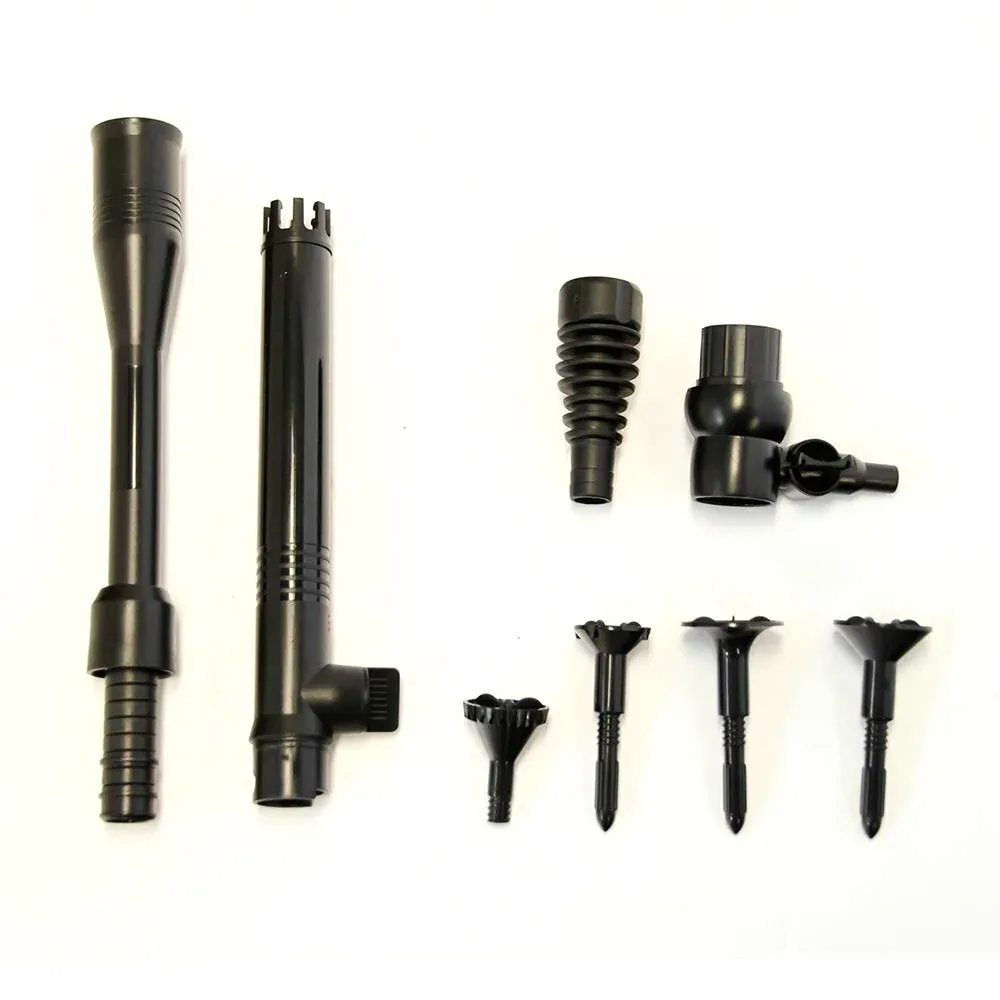
2. Fountain Nozzle
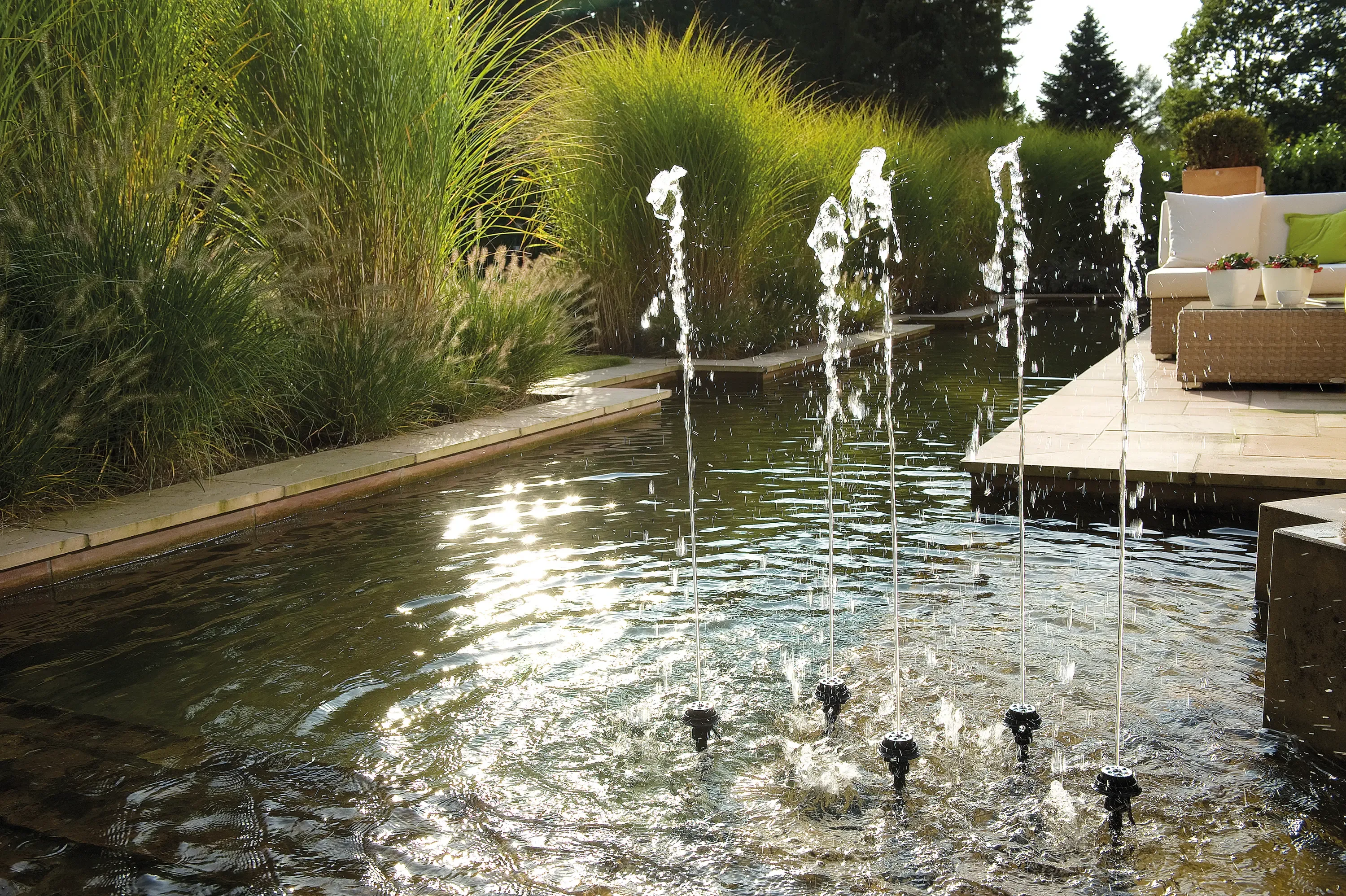
If the pump determines how water is delivered, the nozzle determines how the water looks. Different fountain nozzles can create completely different effects.
Examples include:
- Vertical jets
- Fan-shaped jets
- Bell effects
- Cascade effects
- Aerated water
- Foaming effects
- Laminar water streams
- Multi-jet arrangements
3. Piping System
Piping connects the pump to the fountain nozzles. In a larger fountain, the piping system can become a significant part of the overall engineering design.
Pipe diameter, routing, fittings, valves, and pressure losses all affect the performance of the fountain. Poorly designed piping can reduce the performance of the system even when the pump itself has sufficient capacity.
4. Fountain Lighting
Lighting can dramatically change the appearance of a water fountain. Underwater LED lighting is commonly used to illuminate water jets and create visual effects after dark.
The lighting arrangement should be considered during the fountain design process rather than added as an afterthought. Position, beam angle, intensity, color, and synchronization can all affect the final result.
5. Valves and Control Systems
More advanced fountains use valves and control systems to regulate individual water effects. By controlling different sections of the fountain independently, the system can create sequences of movement.
This is particularly important for dancing fountains and programmed water shows. The control system can coordinate pumps, valves, and lighting to create a synchronized performance.
6. Water Treatment and Filtration
Water quality is another important consideration. Debris, minerals, algae, and other contaminants can affect pumps, nozzles, pipes, and lighting equipment.
Depending on the application, filtration and water treatment systems may therefore be required. A clean water system also helps maintain the appearance of the fountain and reduce maintenance requirements.
From Simple Fountain to Water Show
The basic fountain principle can be expanded into highly sophisticated systems. A simple decorative fountain may require only a pump, piping, and nozzle.
A professional water show can involve:
- Multiple pumps
- Hundreds of nozzles
- Motorized valves
- Underwater LED lighting
- Automated controls
- Sensors
- Water treatment
- Programmable sequences
- Audio synchronization
Why Professional Fountain Design Matters
A fountain may look simple from the outside, but its performance depends on the interaction between many technical components.
For this reason, professional fountain design should consider hydraulic calculations, equipment selection, accessibility, maintenance, safety, electrical requirements, and operating conditions.
At PUMP, we combine fountain technology from OASE with project-specific design considerations to develop water feature systems suited to different applications.
The objective is simple: make sure the technology behind the fountain supports the visual result that the designer or client wants to achieve.